The PharmaCampaigns Take · Population Health
The kidney disease nobody knows they have
Most Australians understand heart disease. Many understand diabetes. Far fewer could tell you much about chronic kidney disease, which is strange, because it is one of the most common serious conditions in the country and one of the quietest.
By the time it announces itself, the damage is usually done. Kidney Health Australia puts it starkly: a person can lose up to 90% of their kidney function before any symptoms appear.
A serious condition that hides in plain sight
Around one in ten Australian adults shows signs of chronic kidney disease. The national picture is more sobering still: recent figures suggest roughly one in seven adults has biomedical signs of the condition, while only a small fraction report knowing they have it. The gap between those two numbers is the condition's defining feature. It is silent by nature, and silence prompts no one to get tested.
The people at risk are not ignoring the warning signs. There are no warning signs to ignore.
The at-risk already walk through the door
What makes this a missed opportunity rather than an unavoidable tragedy is who these people are and where they already go. The leading cause of chronic kidney disease in Australia is diabetes, followed closely by high blood pressure. Which means many of the people most at risk are already regular visitors to the pharmacy, collecting the very medicines, for hypertension, for diabetes, for cardiovascular disease, that mark them out.
The people most at risk are already at the counter, month after month, collecting the medicines that flag the risk.
The opportunity to identify them does not need to be created. It already walks through the door on a repeat schedule.
Why good intentions are not enough
Everyone in the sector agrees that earlier detection matters. That has been true for years. What is missing is not conviction, and it is certainly not clinical understanding. Pharmacists know exactly who is at risk and what a sensible next step looks like: a prompt to check, and a referral for a Kidney Health Check where it is warranted, firmly within scope and well short of diagnosis.
Preventive services do not fail because pharmacists do not care. They fail because a busy pharmacy makes opportunistic, one-more-thing interventions genuinely hard to deliver the same way every time, for every patient who qualifies, on an ordinary day with a full queue.
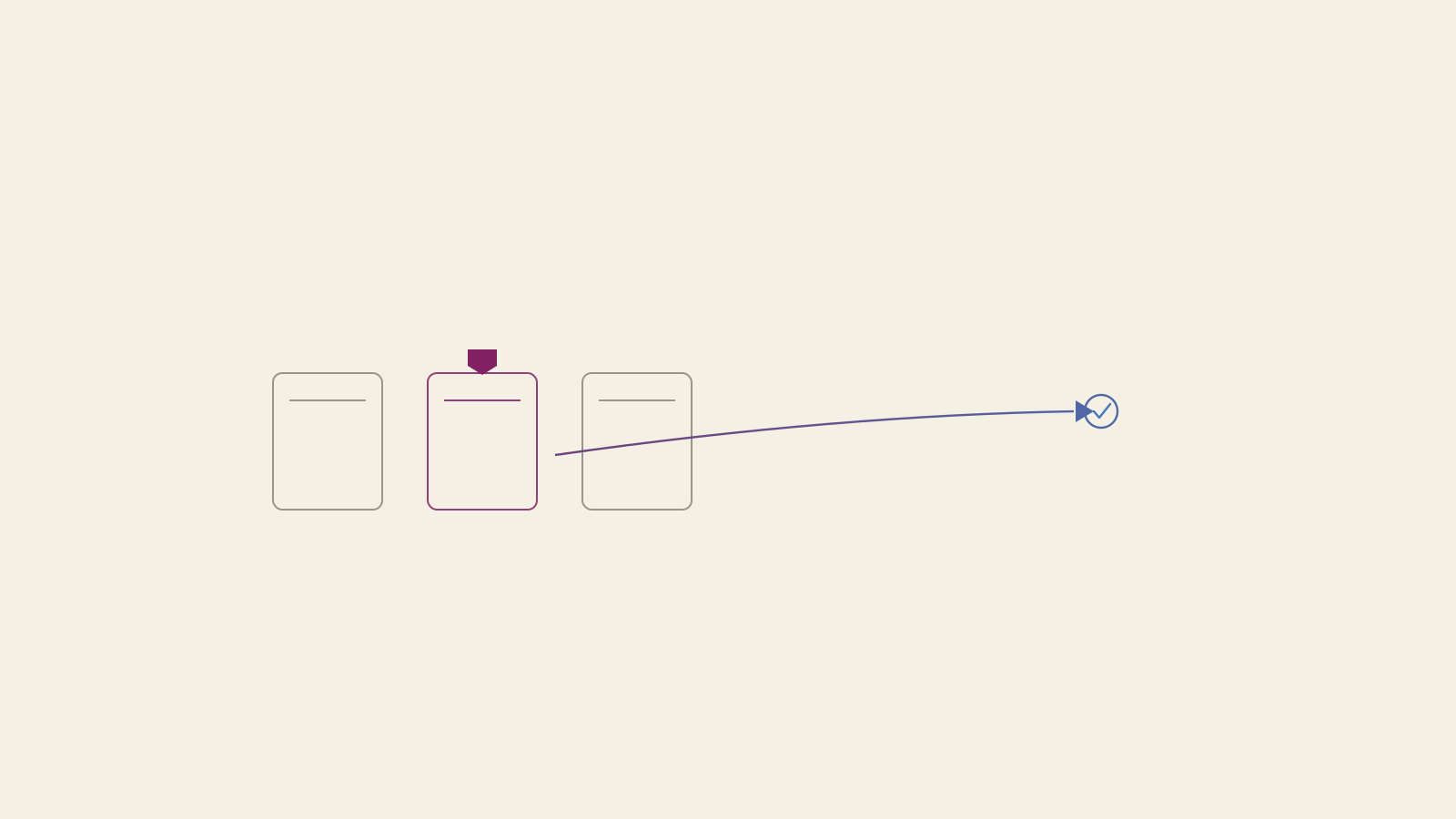
Repeat medicines on a pharmacy counter, one flagged for risk, with a referral pathway.
An execution challenge, not a clinical one
That is the real reframe. Finding high-risk patients before their kidneys quietly fail is not, at heart, a clinical problem. The clinical knowledge is already there, sitting behind every counter in the country.
It is an execution problem: how to turn a good intention into a reliable, repeatable action that fits the reality of a working pharmacy, and fires at the moment the right patient is standing there. Solve that, and a silent condition starts being caught while there is still something to be done about it.
See a verified report, before you spend.
We'll send a redacted end-of-campaign report, completion analytics, photo appendix and all.