The PharmaCampaigns Take · Population Health
The patients we never meet: how pharmacy could find the conditions the system misses
Australia has one of the strongest healthcare systems in the world. And yet, on Diabetes Australia's own estimate, up to 500,000 Australians are living with type 2 diabetes that has never been diagnosed.
These people are not avoiding healthcare. Many of them see a pharmacist more often than they see a GP. They simply have not crossed the one threshold that turns a person at risk into a patient in the system: diagnosis.
Good at treating, less good at finding
A modern health system is extraordinary at treating the conditions it can see. Once someone is diagnosed, the pathways are clear: medicines, monitoring, review, referral. The machinery works.
It is far less designed for the step before that. Finding the condition in the first place, in people who feel well and have no reason to ask, is nobody's core job. Screening depends on someone being in the right place, at the right moment, prompted to look. For a large share of the population, that moment never quite arrives.
A health system built to treat the condition it can see will always miss the condition still walking around unseen.
The network already exists
Here is what makes this more than a lament. The place to find these people is not hypothetical. It is open, staffed, and busy right now.
Millions of Australians walk into a community pharmacy every week, most of them for reasons that have nothing to do with the condition they may be carrying. Community pharmacy may be the most under-utilised screening network in the country. The point is not to replace the GP, and it is certainly not to diagnose. It is to notice risk earlier, and to move that person one step closer to the care they will need anyway.
What this is, and what it is not
This only works if it stays firmly inside professional scope, and the boundary matters. What pharmacy can do at scale is a short, structured sequence: a risk assessment, a brief intervention, and a referral where it is warranted, all resting on the pharmacist's professional judgement.
No diagnosis. No treatment. Just helping the right person enter the system sooner, and leaving the clinical decisions to the clinicians who make them. Done well, opportunistic screening does not compete with general practice. It feeds it.
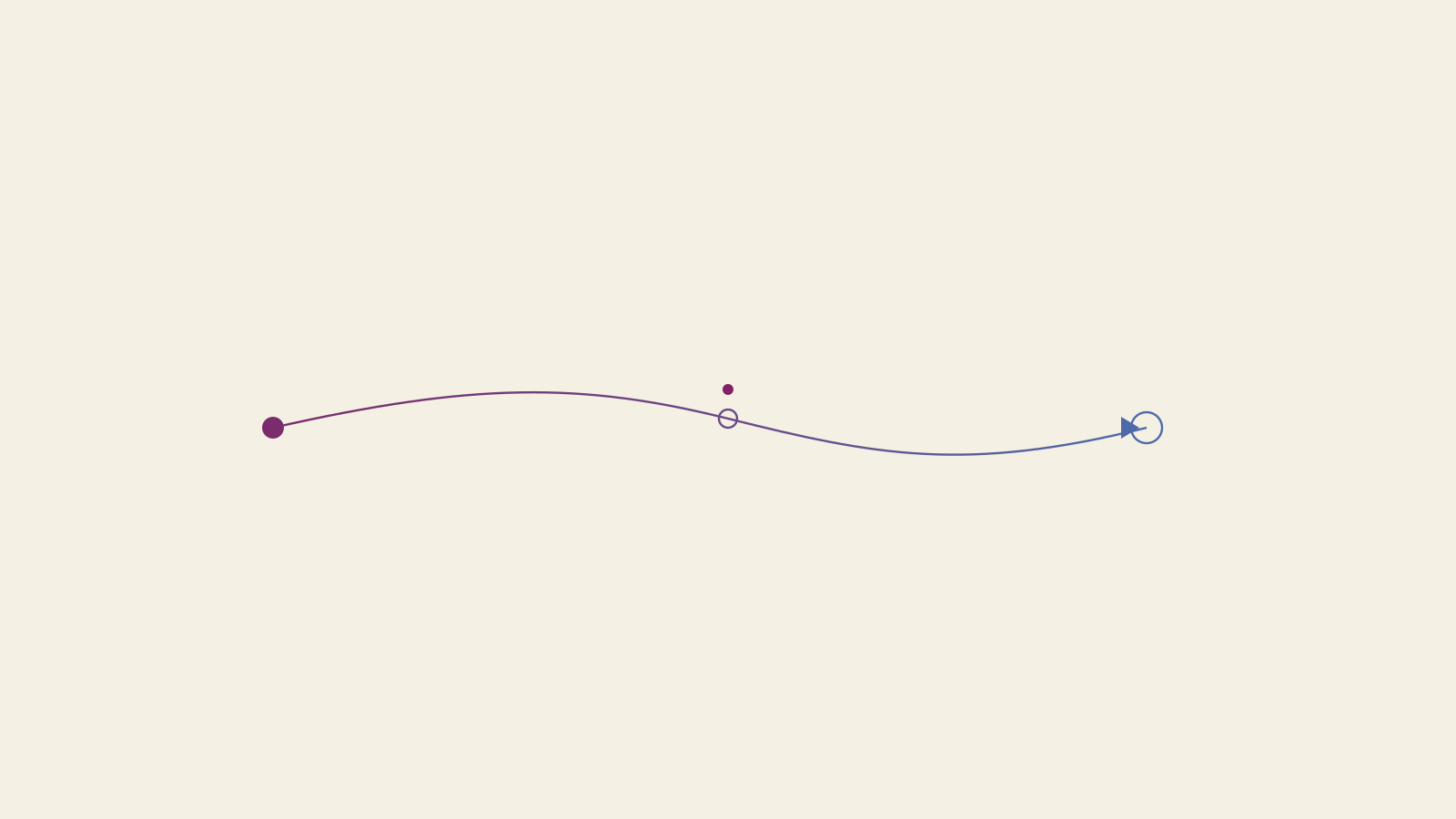
A simple screening path drawn in light, from assessment to referral, staff-side.
The real challenge is not clinical
Here is the part that tends to get missed. The barrier to finding these patients is not knowledge. Pharmacists already understand the risk factors for type 2 diabetes better than almost anyone the public meets day to day.
The barrier is execution. In a busy pharmacy, the difference between screening as a good intention and screening as a reliable service is a simple, repeatable workflow: something that surfaces the right moment, guides the conversation, and makes the referral easy to complete, without adding load the team cannot carry. Build that, and the half-million patients we never meet stop being a statistic and start being people the system finds in time.
See a verified report, before you spend.
We'll send a redacted end-of-campaign report, completion analytics, photo appendix and all.